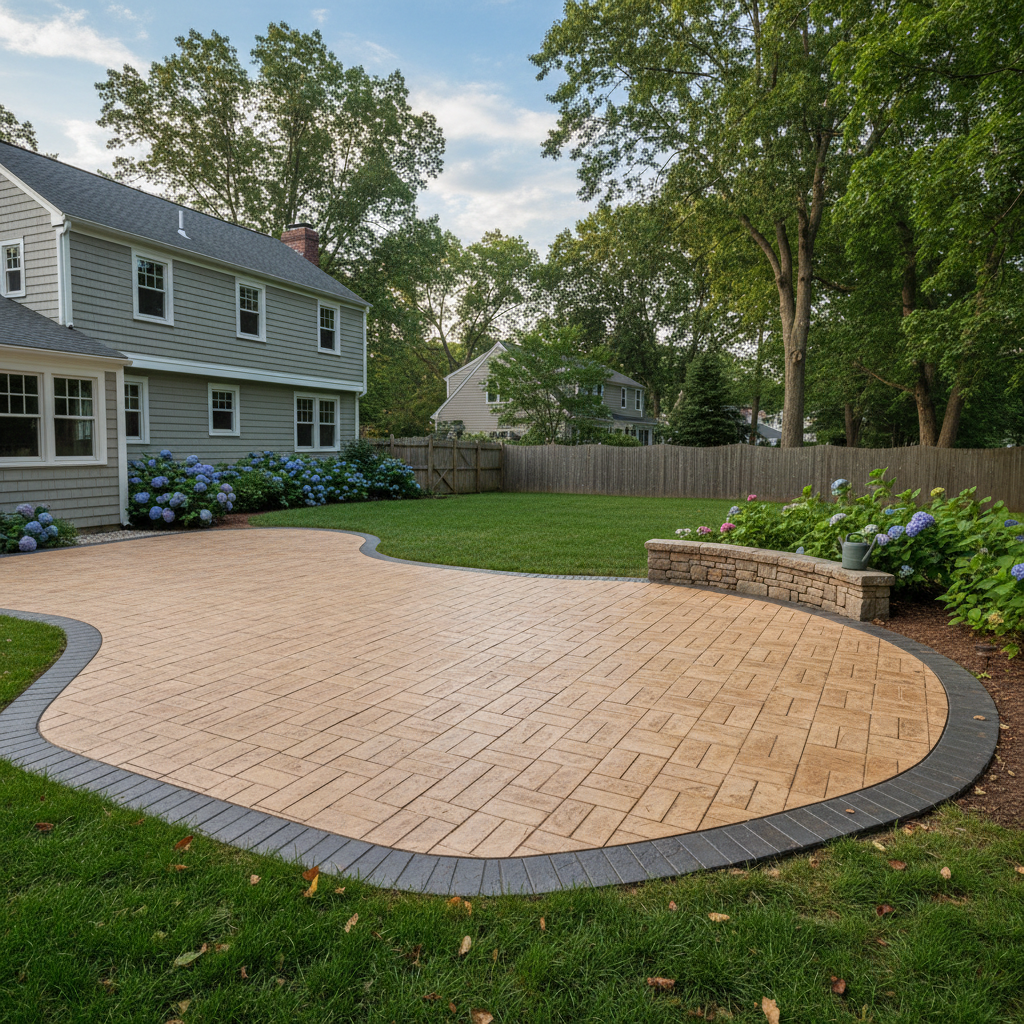
So, you're thinking about a new concrete patio, maybe even making an existing one bigger? Fantastic! But hold on a second before you jump in. Let's chat about something super important for us here in Needham: timing. See, pouring concrete isn't like planting a petunia; you can't just do it whenever and expect the best results, especially with our wild Massachusetts weather.
When's the Best Time to Pour Concrete in Needham?
Honestly, the sweet spot for pouring concrete around here really runs from late spring through early fall. I'm talking May, June, September, and early October. Why then, you ask? It all boils down to temperature and how much moisture is in the air. Concrete needs steady temperatures to cure right. If it's too hot, it dries way too fast, and that can lead to cracks. Too cold, and it cures super slowly, or even worse, it might freeze before it gets strong enough, leaving it weak and easily damaged.
We're really looking for daytime temperatures that consistently stay above 40°F—ideally somewhere between 50°F and 80°F. And those nighttime temperatures? They shouldn't dip too far below freezing. Those "shoulder seasons," like May and September, often give us exactly those perfect conditions. The ground isn't frozen solid from winter anymore, and we're usually past all those heavy, constant rains of early spring, or at least before the deep freeze of late fall sets in. You really want the ground to be stable, not soaked through from melting snow or early spring downpours, you know?
What Weather Conditions Really Matter?
Beyond just the temperature, a few other things play a pretty big role:
- Rain: A little drizzle during the pour? We can usually handle that. But heavy rain? Nope, that's a definite no-go. It thins out the mix, washes away the cement paste, and just weakens the surface. We always keep a close eye on the forecast, and if a storm's brewing, we'll absolutely reschedule. It's always better to wait a few days than to pour a patio that won't last.
- Wind: Believe it or not, strong winds can actually be a problem. They make the surface dry out faster, which, again, can lead to cracking. Sometimes we can set up windbreaks, but if it's really howling out there, it's just not ideal.
- Humidity: Low humidity, especially when it's windy, also speeds up drying. High humidity can slow things down, which isn't always bad, but it's another factor we definitely consider.
- Sunlight: Direct, intense sunlight on a fresh pour can also cause things to dry too quickly. Sometimes we'll use sunshades or schedule pours for later in the day if it's a real scorcher.
It's a delicate balancing act, and every job site is a little different. For example, a patio on the north side of a house in the Broadmeadow area might cure differently than one on the south side of a house up on Needham Heights, even if it's the very same day. We're always checking out these little micro-climates.
Protecting Your Concrete Investment Year-Round
Once your patio is in, the work isn't quite finished. You really need to protect that investment, especially with our New England winters. Here's how:
- Sealing is Key: This is probably the most important thing you can do, honestly. A good quality sealer protects against water getting in, those nasty freeze-thaw cycles, and staining. I usually recommend sealing new concrete about 28-30 days after we pour it, and then resealing it every 2-3 years after that, depending on how much traffic it gets and what it's exposed to. Think of it like sunscreen for your patio.
- Avoid De-icing Salts: This is huge, truly. Most de-icing salts, especially those with ammonium nitrates or sulfates, will absolutely destroy your concrete over time. They cause spalling and just break it down. Stick to sand for traction, or if you absolutely must, use calcium chloride-based products sparingly. Even better? Just shovel promptly.
- Proper Drainage: Make sure water flows away from your patio, not towards it or pooling on it. If water just sits on the surface and then freezes, it puts a ton of stress on the concrete.
- Clean Regularly: Sweep off leaves and debris. If you spill something, clean it up quickly! Stains are much harder to remove once they've really set in. A good power wash once a year can do wonders, but don't go too high with the pressure, especially on older concrete.
- Watch for Cracks: Small hairline cracks are totally normal; concrete expands and contracts, after all. But if you start seeing larger cracks that are widening, or pieces spalling off, give us a call. Sometimes they're just cosmetic, but other times they point to a bigger issue that's best handled sooner rather than later.
Getting your concrete patio installed correctly the first time, and then taking good care of it, will save you a lot of headaches and money down the road. We at Progressive Concrete Solutions have been doing this for a long time, and we really know what it takes to make concrete last here in Needham. Don't hesitate to reach out if you have questions about your specific project or just need some advice.